

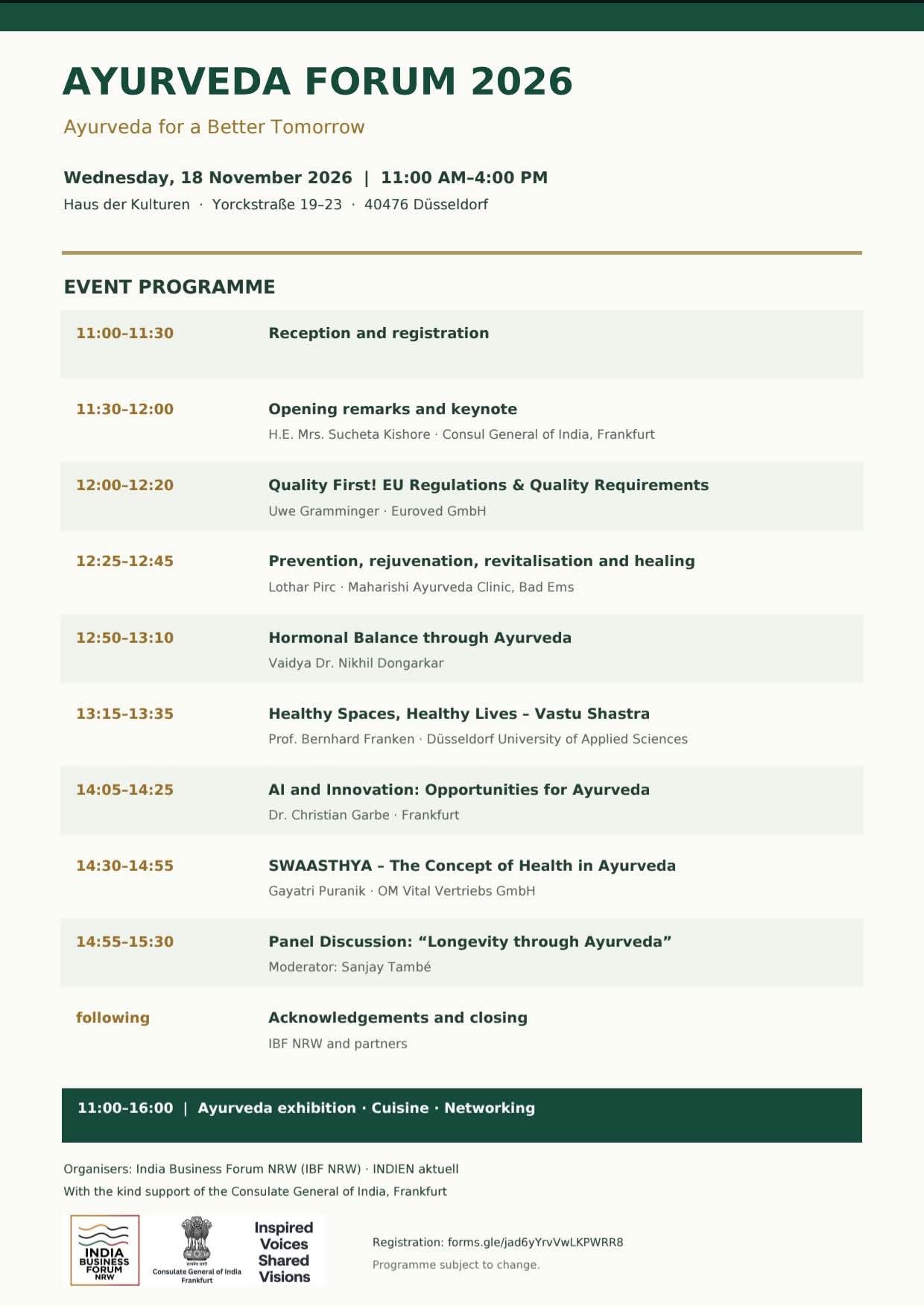
The concept of SWAASTHYA sits at the heart of what Ayurveda calls its primary purpose: "Swasthasya SWAASTHYA Rakshanam," which means protecting the health of the healthy. Before treating illness, Ayurveda asks how illness can be prevented in the first place.
One of Ayurveda´s earliest texts - the Charaka Samhita devotes four chapters (Swastha Chatushka) on giving a systematic, well structured and practical guide to maintaining balance and stability in spite of all the upheavels that life can bring with it. Understanding this framework is simple: It only requires a willingness to observe your own patterns and make small, considered adjustments. This is what makes it so relevant for everybody even today.
Doshas, Dhatus, and the Logic of Balance
The principles of SWAASTHYA help to understand what it is trying to protect: SWAASTHYA as a state of health in which the three Doshas (Vata, Pitta, Kapha), the seven Dhatus or body tissues, and the Malas or waste products are all functioning in as they should. When any disturbance takes place, the body sends out signals through symptoms that often in modern life may be dismissed as normal or are not tackled appropriately, for example: fatigue, digestive discomfort, restless sleep, emotional volatility.
In Ayurveda Vata governs movement and the nervous system. Pitta governs digestion, metabolism, and body temperature. Kapha governs structure, moisture, and immunity. The principles of SWAASTHYA provide a map for keeping all three in their proper functioning order through choices made every single day.
Practical Integration: From Principle to Morning Routine
One of the most common objections to Ayurveda is that it seems complicated or time-consuming. The principles of SWAASTHYA address this directly by recommending a sequence of small, repeatable actions which when followed regularly show unmistakeable positive results in maintenance of health, immunity, resilience, contentment, mental clarity and emotional positivity in a balanced life.
The practices recommended are simple, like in the morning routine:
• Scraping the tongue every morning and evening to remove accumulated toxins (Ama).
• Practicing oil pulling in the morning for several minutes with sesame or coconut oil.
• Applying a few drops of warm oil to each nostril (Nasya)
• Applying oil to your whole body (Abhyanga) before bathing
• Excercising with light movement or yoga
• Bathing daily and dressing in clean clothing
• Eating warm, easily digestible breakfast.
This sequence takes between twenty and forty minutes depending on individual pace. It is not to be seen as a luxury. It is a structured investment in the kind of daily consistency that Ayurveda identifies as the foundation of long-term health.
Seasonal adjustments
As November settles into the northern hemisphere, the Ayurvedic calendar places us in Hemant Ritu, the early winter season. This is a period when Vata can become aggravated by cold, dryness, and wind. This chapter in the Charaka Samhita recommends warm, nourishing, and slightly oily foods during this time: ghee, warm milk, root vegetables, and whole grains. Excercise and activity suitable for the season and personal preference
This is not arbitrary. The logic is that the body's digestive fire, Agni, strengthens in cooler months and can process heavier, more nourishing foods.
Seasonal adaptation requires nothing special - only attention to what the body actually needs at a given time of year.
Impulse Regulation: What Not to Suppress
The human body mechanisms work efficiently and give clear signals that are experienced as „urges“. The understanding of the principles of SWAASTHYA also give guidance about the consequences of ignoring these bodily signals. Suppressing the urge to urinate, for example, is said to disturb Vata. Suppressing hunger over time weakens Agni. These are not metaphors. They describe physiological patterns that are universal and have also been noted in modern sciences under different terminology.
Understanding of SWAASTHYA also gives guidance on emotional impulses which is just as practical. Anger, when expressed without regulation, aggravates Pitta. Chronic suppression of grief or anxiety disturbs Vata. The recommended approach is neither complete suppression nor unfiltered expression, but conscious, gradual regulation through practices such as meditation, breathwork, and ethical reflection.
Sadvritta: Ethics as a Health Practice
In the fourth chapter of the SWAASTHYA Chatushka in the Charaka Samhita ethical conduct is not a philosophical addition but a practical health measure. Honesty, respect for others, and social responsibility reduce the psychological burden that chronic dishonesty or conflict creates. A calm, principled social life supports the kind of mental stability that, in Ayurvedic understanding, directly sustains the Doshas.
Caring for the senses also plays a very important role in maintaining SWAASTHYA in human life. It entails limiting unnecessary overstimulation and choosing environments that support clarity rather than chaos. It also means cultivating gratitude and mindfulness as daily habits and not as occasional practices.
The strength in understanding the principles of SWAASTHYA show that it is something that can be actively maintained through the many small decisions a human being takes each day. This ongoing process is an empowerment for each single individual for creating his or her own life of peace, purpose, health and happiness.